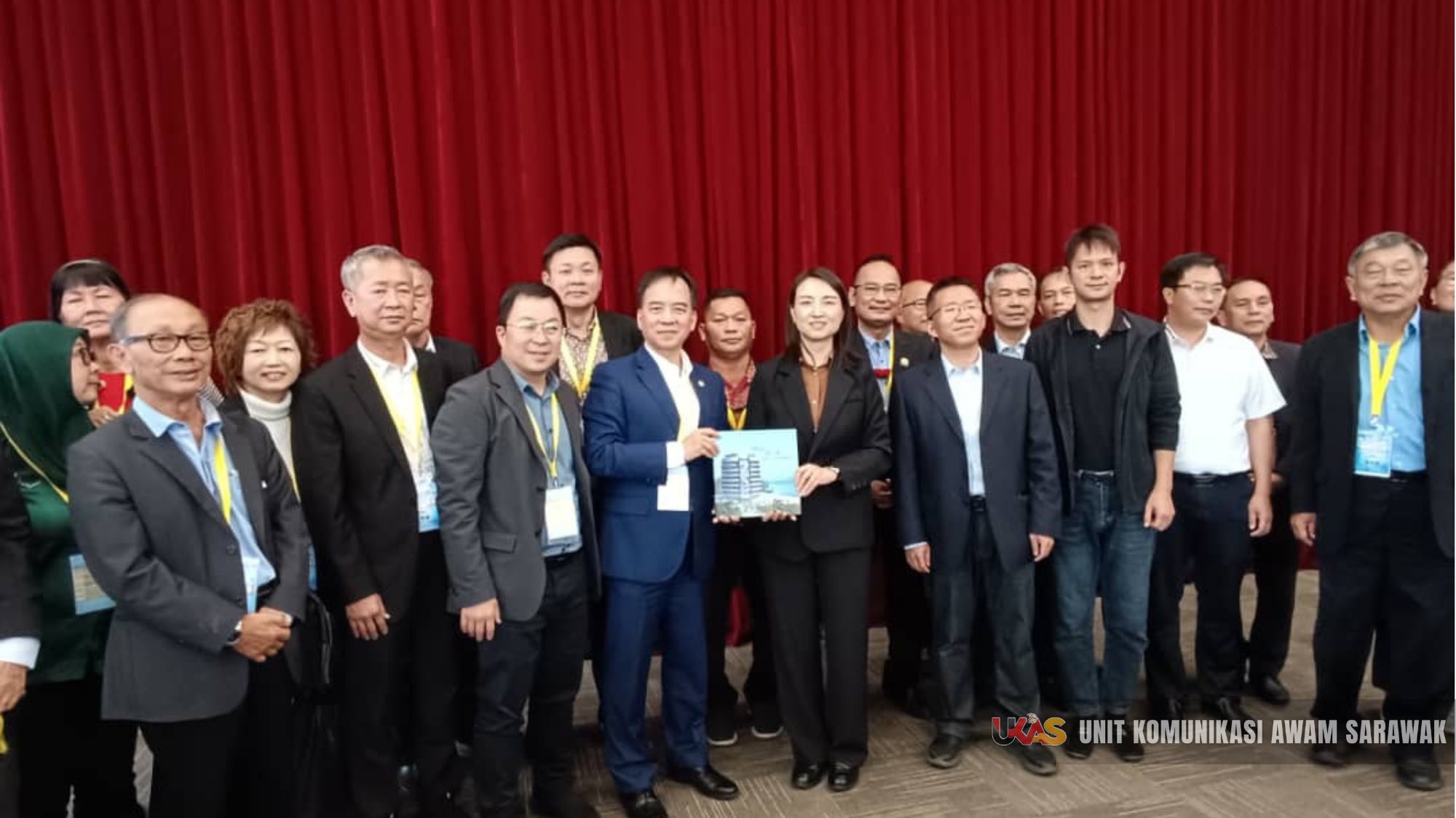
KUCHING: A 38-member Sarawak cultural delegation completed a five-day official visit to Yunnan, China, from 23 to 27 September 2025, reinforcing people-to-people ties while opening new avenues for cooperation in culture, tourism, education, and the economy.
Led by Deputy Sarawak Secretary (Operation) Datu Hii Chang Kee, the delegation included leaders from the Sarawak Chinese Association (SCA) and representatives from 12 ethnic associations.
They were warmly received by seven Yunnan government and academic institutions, including Yunnan Nationalities University and the Foreign Affairs Office.
Datu Hii emphasised that the cultural similarities between Sarawak’s 34 ethnic groups and Yunnan’s 26 ethnic groups form a strong foundation for deeper ties.
He said the exchange supports Sarawak’s Post-COVID-19 Development Strategy 2030 (PCDS 2030), which places priority on innovation, inclusivity, and sustainable development.
SCA President Harry Lee Tian Song described the visit as a “cultural roots journey” that reflects the diversity and shared heritage of Sarawak’s communities.
At the same time, SCA Adviser Datuk Hii King Chiong highlighted that cultural initiatives such as the Borneo Cultural Carnival not only strengthen unity but also create platforms that enhance Sarawak’s visibility on a national and international level.
The delegation also extended an invitation to Yunnan representatives to participate in the 4th Borneo Cultural Carnival in Miri from 1–12 July 2026, which will gather delegates from Sarawak, Sabah, Brunei, and Indonesia.
The event is positioned not only as a celebration of traditions but also as a catalyst for tourism, cross-border collaboration, and investment opportunities.
Observers described the mission as signalling a “golden phase” in Sarawak–Yunnan relations, with cultural diplomacy complementing economic and educational linkages that promise to benefit both regions in the years ahead. -UKASnews