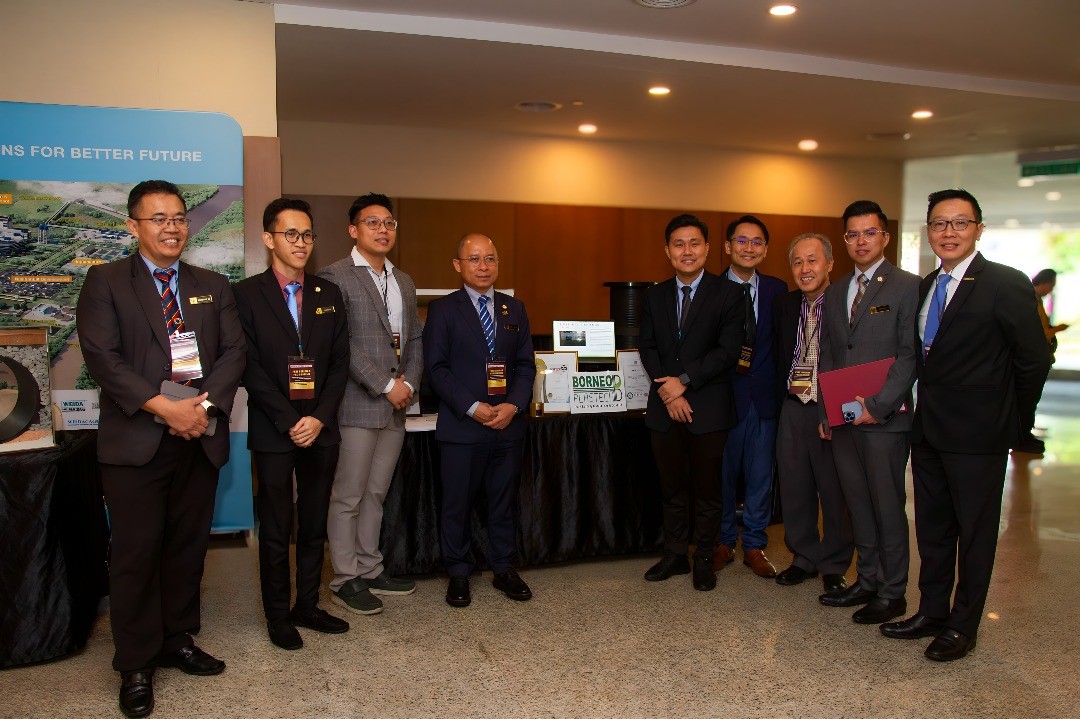
KUCHING: A key seminar on flood control was held in Kuching on Tuesday, bringing together government officials, engineers, academics, and industry experts to find smarter ways to manage stormwater and prevent floods in Sarawak.
The event, titled ‘Improving Flood Control in Stormwater Systems for Sarawak: Current Status, Challenges and Capabilities’, took place at Imperial Hotel and was officiated by Deputy Permanent Secretary to the Ministry of Public Health, Housing and Local Government Sarawak (MPHLG), Desmond Douglas Jerukan.
Organised through a joint effort by the Technological Association Malaysia (TAM) Sarawak Branch, BIMAGE Consulting, and Autodesk Asia, with strong backing from MPHLG Sarawak, the seminar came at a critical time.
In a statement it said, rapid development and more frequent extreme weather events due to climate change are putting pressure on Sarawak’s flood management systems.
The message was clear, that is the state needs a new generation of smart, coordinated flood control strategies.
In his speech, Desmond highlighted that climate change is no longer a distant concern, it is already affecting Sarawak’s towns and cities.
He stressed the importance of taking swift, united action to build more adaptable and intelligent systems to cope with future storms.
The seminar, he said, fits directly into Sarawak’s broader Post COVID-19 Development Strategy (PCDS) 2030 which aims to build a high-income, inclusive, and environmentally sustainable state through innovation.
One of the central themes of the seminar was cross-agency collaboration.
Chairman of TAM Sarawak and Director of the Public Works Department (JKR) Sarawak, Adjunct Professor Dr. Cassidy Morris pointed out the need for different departments such as JKR, the Department of Irrigation and Drainage (DID), and local authorities to work more closely together.
This kind of teamwork ensures that road and drainage systems are connected to larger flood plans, helping to reduce flooding across entire catchment areas rather than just shifting the problem elsewhere.
The seminar featured detailed presentations from agencies like DID Sarawak, which discussed their current flood mitigation strategies, and the Sewerage Services Department, which explained how better planning and regulation of sewer systems can help prevent water from backing up during heavy rains.
One of the standout moments was a technical showcase by Autodesk, which demonstrated how modern digital tools can be used to predict, monitor, and respond to flooding.
Technologies like Building Information Modelling (BIM), live catchment modelling, and real-time data analytics were shown to be game-changers in shifting Sarawak’s flood management from reactive to proactive.
Despite progress, the seminar also addressed existing gaps.
Many drainage systems in fast-developing urban areas are outdated or too small, and there's still a lack of unified hydrological data sharing across departments.
In addition, simulation tools that help forecast flooding are not always used to their full potential.
To help tackle these issues, the seminar introduced advanced software tools like InfoWorks ICM Live and GIS-based systems.
Experts shared case studies showing how such tools are already being used in other regions to successfully plan drainage upgrades and reduce flood risks.
These examples offered practical solutions that Sarawak could adapt to suit its own needs.
Importantly, the event encouraged open dialogue among policymakers, municipal engineers, researchers, and private sector technology providers. -UKASnews