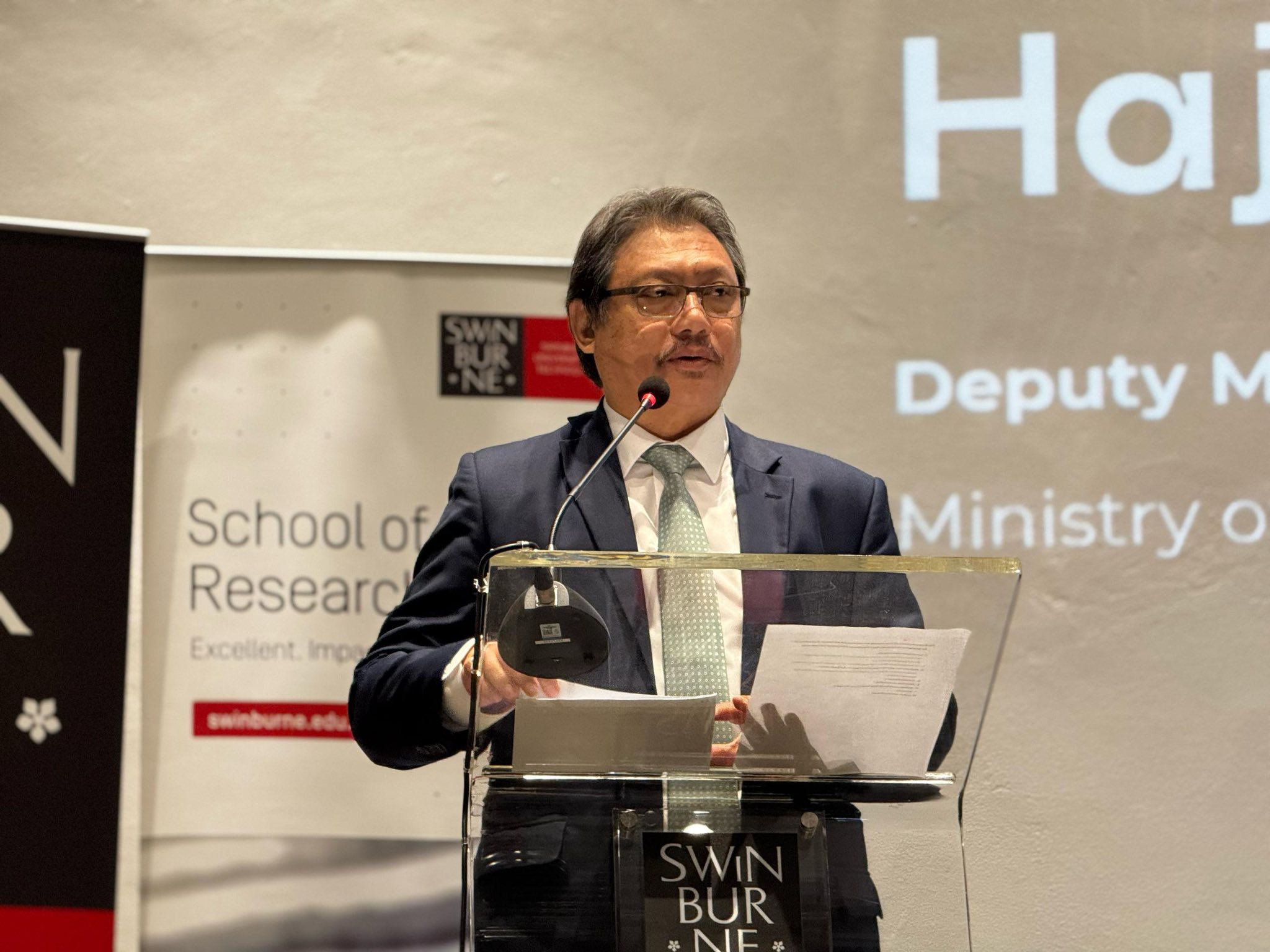
KUCHING: Sarawak continues to make strides in the field of research and innovation with the launch of the Swinburne Sarawak Research Master Plan 2030.
Deputy Minister for Energy and Environmental Sustainability, Datuk Dr. Hazland Abang Hipni said research plays a vital role in building a resilient, innovative, and inclusive future for Sarawak.
He said the strategic plan aligns with Sarawak’s aspirations under the Post COVID-19 Development Strategy (PCDS) 2030, particularly in the areas of digital transformation, energy transition, sustainable development, and growth of highly skilled talent.
“The emphasis on research themes such as Artificial Intelligence (AI)-based innovation, hydrogen and biomass energy, digital health, circular economy, as well as building an innovative and inclusive society are highly relevant to global and local needs,” he said.
He said this when officiating the launch of the Swinburne Sarawak Research Master Plan 2030 here, on Monday.
Datuk Dr. Hazland also shared his ministry's experiences during visits to several leading global research centres, including Shell’s Headquarters in The Hague, Samsung Biogenics Research Centre in Korea, and the Carbon Capture, Utilisation and Storage (CCUS) Research Centre at Imperial College London, supported by Petronas.
He informed that Sarawak has a unique advantage through the Sarawak Biodiversity Centre (SBC) which has registered over 200 species with potential applications for the treatment of serious diseases such as cancer, immune-related illnesses, and Alzheimer's disease.
“However, these discoveries have yet to be fully utilised by the industry.
“This could not only offer solutions for these diseases but also open up a new source of revenue for Sarawak,” he added.
Datuk Dr. Hazland also stressed that the success of research requires close collaboration between the government, academia, and industry.
In this regard, Sarawak has already established several research centres such as the Sarawak Research Development Centre (SRDC), Sarawak Clinical Research Centre, Tropical Peat Research Institute, and upcoming initiatives such as the Tropical Diseases Centre and the Sarawak Cancer Centre.
Also present were Pro Vice-Chancellor and Chief Executive Officer of Swinburne Sarawak, Ir. Professor Lau Hieng Ho, and Deputy Pro Vice-Chancellor (Research) of Swinburne Sarawak, Professor Dr. Ida Fatimawati Adi Badiozaman. -UKASnew