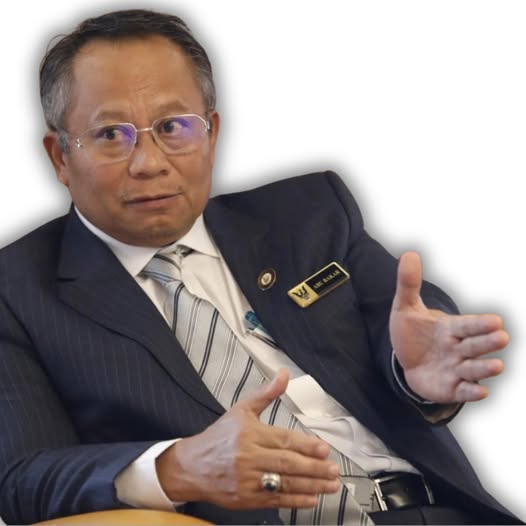
KUCHING: Sarawak Secretary Datuk Amar Mohamad Abu Bakar Marzuki has urged all civil servants in the state to fully embrace the 3R approach – Revisit, Rethink, Recharge – as part of their work culture to better align with the state’s vision of becoming a developed region by 2030.
In delivering the text Amanat April 2025, address for the Sarawak Civil Service (SCS) today, Datuk Amar Mohamad Abu Bakar stressed that the time has come for the public service machinery to recalibrate its mindset, renew its commitment, and realign its methods to meet the ambitious goals under the leadership of Sarawak Premier Datuk Patinggi Tan Sri (Dr) Abang Abdul Rahman Zohari Tun Abang Openg.
He said the Premier's bold policies, including the Post COVID-19 Development Strategy (PCDS) 2030, digital economy transformation, green and blue economies, hydrogen development, and the establishment of a sovereign wealth fund, represent major shifts that demand an equally progressive civil service to support implementation.
“These initiatives are not just visions on paper – they require strong administrative commitment and machinery that is efficient, swift, and impactful,” he told the assembly of department heads and civil service officers. “We must ask ourselves constantly: Are our policies still relevant? Are our procedures still efficient? Have we recharged ourselves for the challenges ahead?”
Datuk Amar Mohamad Abu Bakar reiterated his long-standing call for the public sector to operationalise the 3R mindset in daily governance.
Departments and agencies must not remain trapped in outdated routines, he said, warning that delays, bureaucratic hurdles, and a reactive culture have no place in the new Sarawak administration.
To further institutionalise the concept, he announced that every ministry and department is now required to undertake and document at least 10 initiatives guided by the Revisit, Rethink, Recharge approach this year, under the coordination of the Sarawak Transformation and Innovation Unit.
“This exercise is not merely symbolic,” he said. “It’s an opportunity for us to innovate and simplify work processes, and most importantly, to produce outcomes that benefit the people directly.”
Datuk Amar Mohamad Abu Bakar also spoke candidly about the growing demands placed upon civil servants by both the public and state leadership.
He stressed the need to adopt a culture of urgency, outcome-based delivery, and proactive action without having to wait for formal instructions.
“There is no excuse for inaction. Not everything should require a report or top-down directive,” he said. “While many complaints have been resolved quickly, there remain far too many issues that are unnecessarily delayed. This erodes public confidence in our ability to serve.”
To address this, he called on department heads to adopt a more hands-on approach by spending more time on the ground, engaging with communities, and gaining a real-time understanding of local issues.
This, he said, is the only way to ensure timely, practical, and people-centric interventions.
He also reminded leaders across the civil service that they bear responsibility for ensuring their teams and concessionaires operate with integrity, transparency, and accountability.
Effective monitoring and delivery, he said, must become the cornerstone of every public project and policy rollout.
Turning his focus to collaboration, Datuk Amar Mohamad Abu Bakar emphasised the importance of unity within the Sarawak Civil Service.
He said the concept of ‘One SCS’ must be actively practised, not only within state departments and agencies but also through synergy with the Federal Civil Service in Sarawak.
“A united public service makes things happen faster. Teamwork is the key to smoother implementation, especially when dealing with stakeholders and members of the public,” he said. “Let’s tear down silos and focus on delivery that is citizen-centric.”
He concluded his speech with a rallying call for all officers to recommit themselves to the higher ideals of service, innovation, and integrity, noting that the civil service will continue to play a pivotal role in shaping Sarawak’s future.
“We are not just implementers — we are enablers of change. Let us move forward with purpose, unity, and resilience,” he said.
The monthly address was attended by top civil service officials from across Sarawak and served as a platform to reflect on performance, share new directives, and reinforce the state’s public sector transformation agenda. -UKASnews