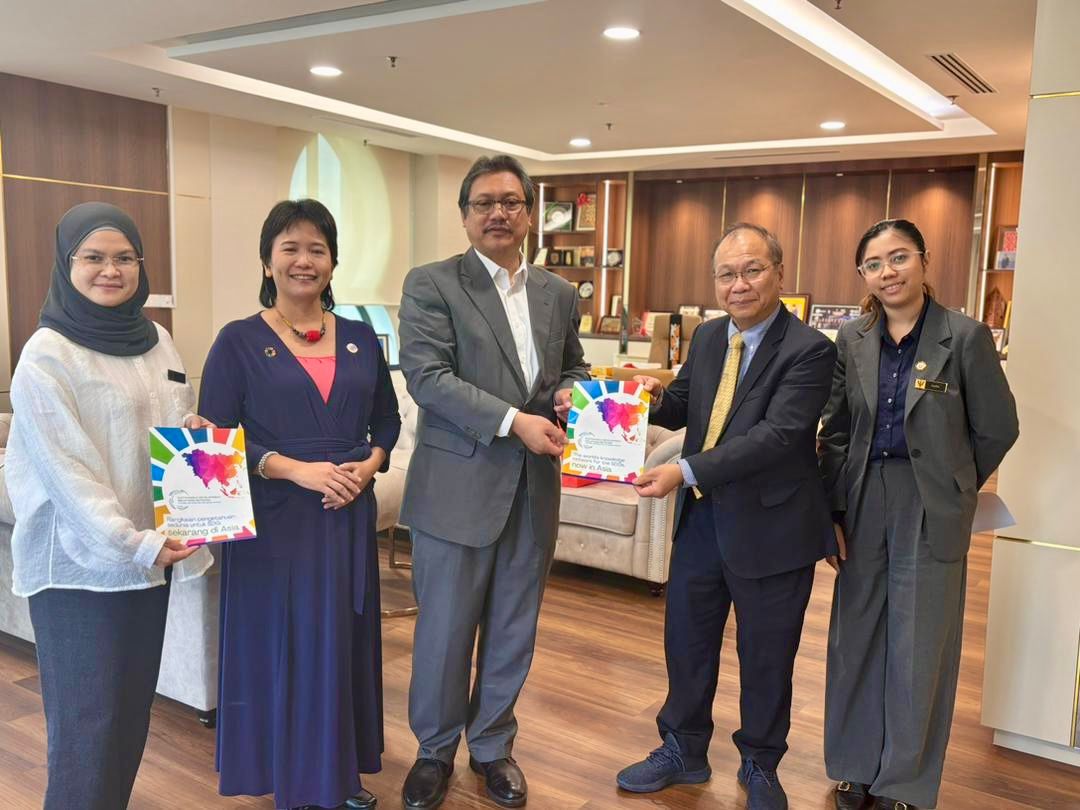
KUCHING: Sarawak looks into strengthening safeguarding the state’s power infrastructure for continued economic and social well-being.
In this regard, Deputy Minister for Energy and Environmental Sustainability, Datuk Dr Hazland Abang Hipni received a visit from United Nations (UN) Sustainable Development Solutions Network (SDSN), Asia Headquarters, Professors Woo Wing Thye and Leong Yuen Yoong on Thursday.
According to a statement today, the visit marks a significant step toward strengthening cooperation on sustainable development and climate resilience.
It also marks an important step in strengthening partnerships between Sarawak and the global community to address climate change, promote sustainable energy solutions and safeguard the future for generations to come.
Discussions focused on the critical need to integrate Sea Level Rise (SLR) projections into Sarawak's residential, industrial areas and power sector modeling.
The meeting emphasised that such foresight is crucial for ensuring the resilience of energy infrastructure against climate threats and for effective government safety planning.
Datuk Dr Hazland expressed gratitude for the insightful presentation and reaffirmed Sarawak’s commitment to sustainable energy and climate resilience.
Both parties agreed to explore further collaboration on power sector modelling and policy recommendations to safeguard Sarawak’s energy infrastructure against rising sea levels.
Proactive planning of residential and industrial areas and power disruptions which trigger widespread disruption across essential services, including transportation, water and healthcare is highly crucial.
A comprehensive plan is required for residential, industrial areas and power sector modelling tailored to Sarawak’s unique coastal geography and land dynamics, including subsidence and uplift.
Understanding these localised factors is crucial for accurate risk assessment and effective adaptation which involves four key components that is scenario-based planning, geospatial analysis, risk assessment and optimisation models. -UKASnews