KUCHING: The Sarawak Inland Revenue Board (LHDN) is reinforcing its risk-based approach to address tax compliance challenges and ensure fair enforcement.
Director of the Sarawak Inland Revenue Board, Vijayen Nagalingham, explained that tax compliance involves adhering to tax laws, accurately reporting financial data, filing tax returns on time, and paying the correct amount of tax.
He highlighted that constant changes in tax laws and complex record-keeping often present challenges for taxpayers, who need to rely on honesty, integrity, and sometimes professional help.
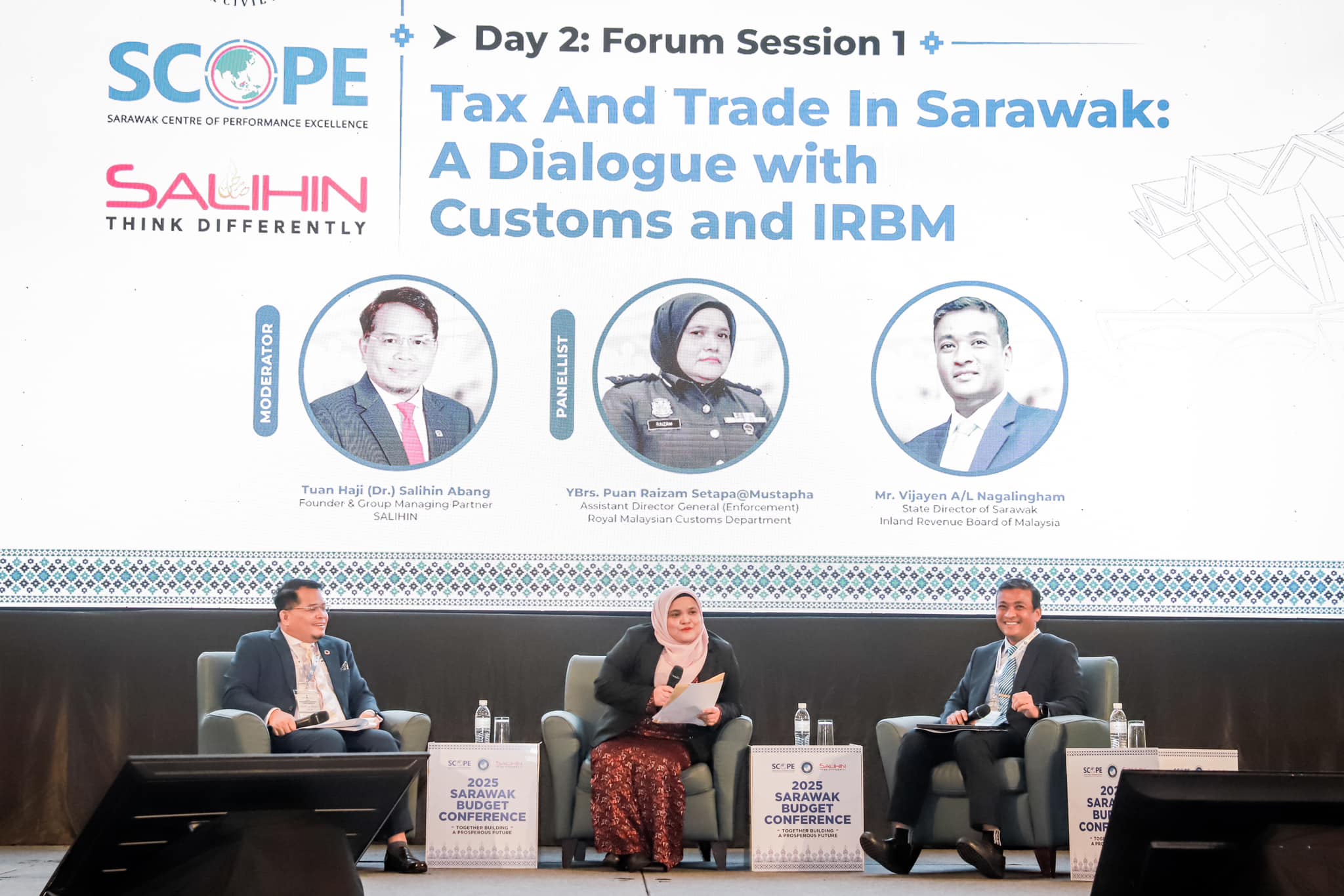
“Tax compliance is not only a legal obligation but also helps businesses avoid financial penalties, legal complications, and potential damage to their reputation,” Vijayen said during his speech at the Tax and Trade in Sarawak: A Dialogue with Customs and IRBM forum, part of the 2025 Sarawak Budget Conference held at the Borneo Convention Centre Kuching (BCCK) on Wednesday.
Vijayen stressed that complying with tax laws also opens up opportunities for businesses to access government contracts, with the Tax Compliance Certificate (TCC) being a key requirement for participating in public tenders.
When discussing how cases for compliance checks are selected, he clarified that industries are not targeted randomly.
Instead, a detailed risk assessment is carried out, which considers financial reports, economic growth benchmarks, and data from enforcement agencies such as the Royal Malaysian Customs Department.
This method ensures the focus is on high-risk areas, promoting fairness and efficiency in enforcement.
He also noted that compliance audits are meant to educate, not punish, businesses.
The goal is to guide taxpayers toward following the law, with stricter actions reserved for those who deliberately evade taxes.
“In most cases, taxpayers genuinely want to comply. Our role is to educate and support them through the process, reserving stricter measures for those who intentionally avoid their obligations,” he added.
Vijayen further mentioned that LHDN’s collaboration with other agencies, including joint operations, helps streamline the compliance process, making it easier for taxpayers and preventing multiple audits by different authorities. -UKASnews