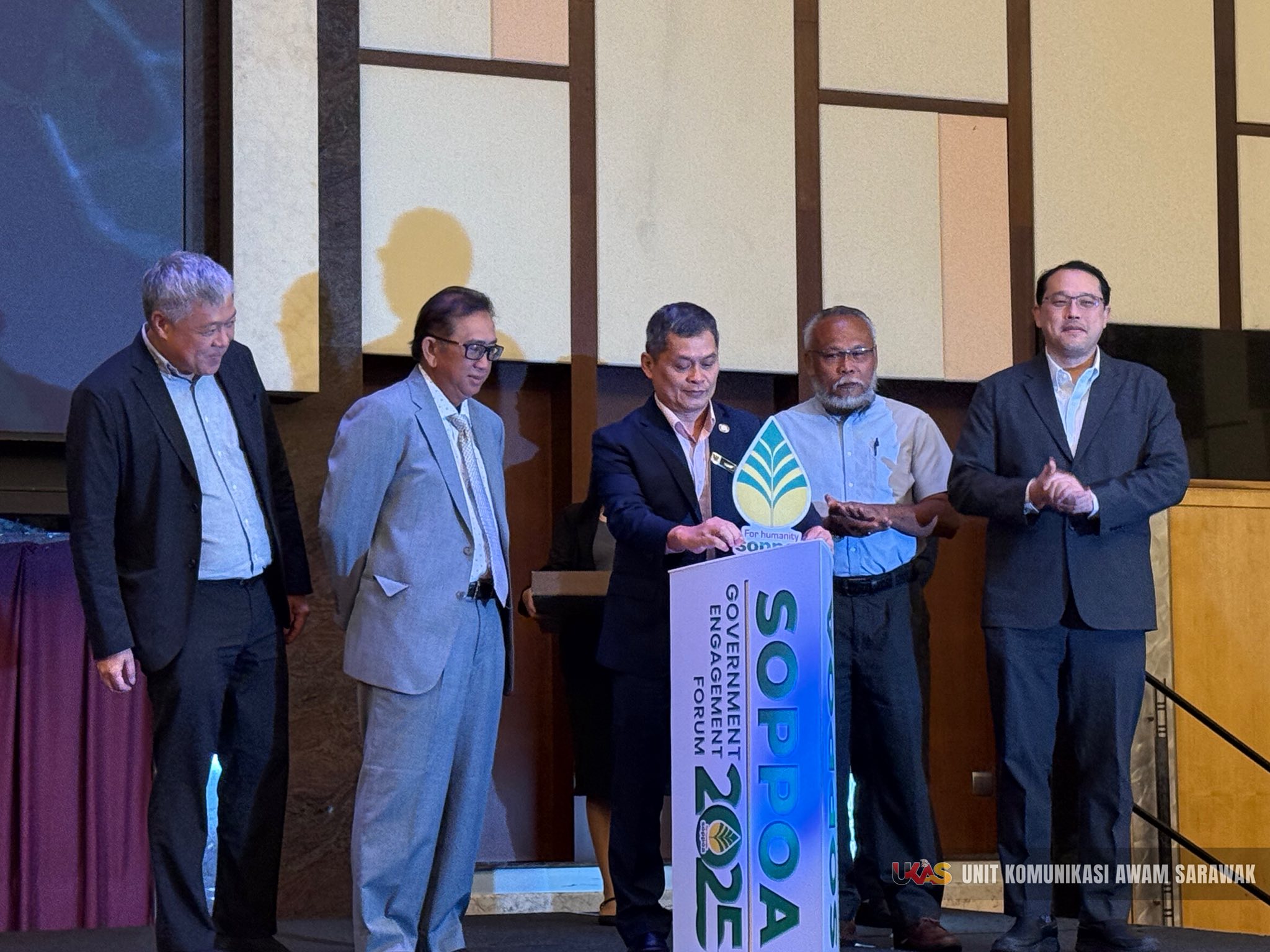
KUCHING: The palm oil plantation sector has overtaken crude petroleum as Sarawak’s leading export contributor, strengthening its position as a key driver of the state’s economy.
In 2023 alone, the palm oil industry generated RM14.3 billion, representing 10.9 per cent of Sarawak’s total export value.
Permanent Secretary to the Ministry of Food Industry, Commodities and Regional Development, Datu Sirai Daha, said this milestone demonstrates not only palm oil’s critical role in the state’s Gross Domestic Product (GDP), but also Sarawak’s reputation as a global leader in sustainable palm oil production.
“Sarawak’s palm oil exports last year reached RM14.3 billion, or 10.9 per cent of the state’s overall export value. It has now surpassed crude petroleum, which has long dominated the state’s revenue,” he said.
He made the remarks when officiating the Sarawak Oil Palm Plantation Owners Association (SOPPOA) Government Engagement Forum on Thursday.
Datu Sirai highlighted that the industry’s achievements are supported by continuous efforts from plantation companies, including Sarawak Land Consolidation and Rehabilitation Authority (SALCRA), and smallholders.
Their contributions have not only boosted production, but also spurred rural development by bringing essential infrastructure such as roads, water, electricity, and telecommunications to previously isolated areas.
“The industry is not just about economic contribution, it is a catalyst for rural transformation and improving the standard of living of local communities,” he stressed.
Datu Sirai noted that the success of the palm oil sector has motivated the state government to reinforce collaboration with stakeholders to ensure Sarawak’s industry remains competitive in international markets through sustainable practices and compliance with global standards.
“The Sarawak government, through my ministry, will continue to support this sector so it can seize downstream opportunities, meet international standards, and sustain its significant contribution to Sarawak’s economy and development,” he said.
At the same time, he acknowledged that the industry must also address challenges in meeting the requirements of international markets, such as compliance with the European Union’s Deforestation Regulation (EUDR). -UKASnews